





Autobiography
GIRAF 1.0 in Youtube!
Click HERE to watch this video.

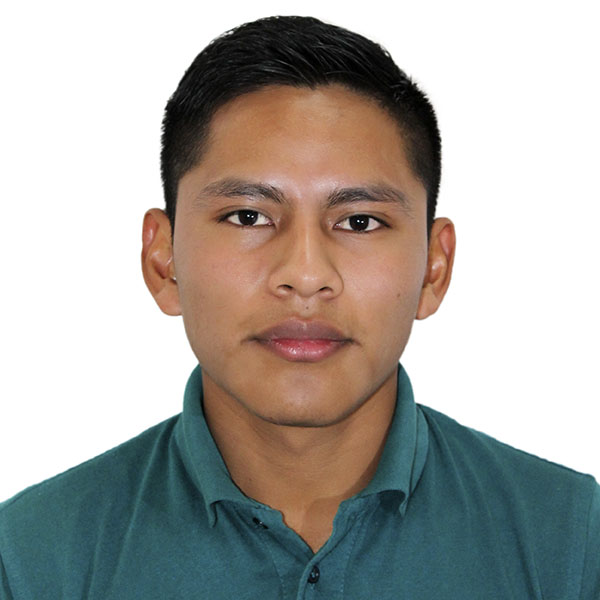
Hi there! I am Plex, a Postdoctoral Research Associate under the supervision f Professor Nik Cunniffe in the Department of Plant Sciences at the University of Cambridge, United Kingdom.
Aaron I. Plex Sulá (Spanish; born in 5 July 1997) is originally from Guatemala. He is a plant pathologist by training and interdisciplinary researcher focusing on epidemiology, ecology, and geographic risk assessment of plant diseases and pests. His research integrates mathematical and epidemiological modeling, artificial intelligence, machine learning, spatial ecology, network science, and computational biology to understand the emergence and spread of biological threats to agricultural systems and natural ecosystems.
Plex was raised in Sumpango, Sacatepequez, Guatemala, where his family work as producers of tomato, tomatillo, peppers, beans, cucurbits, peas, and maize. In 2019, he received a Bachelor of Sciences in Agriculture and Animal Sciences from Zamorano University, Honduras, graduating among the top five students in his cohort. He then earned his PhD in Plant Pathology from the University of Florida, USA, in 2026, where he conducted research under the mentorship of Preeminent Professor Karen A. Garrett. His professional training builds on an extensive foundation in agricultural sciences, including life-long practical experience in vegetable production, farm management, and plant health in Guatemala.
His research focuses on developing innovative, data-driven approaches to strengthen global plant biosecurity. Among his major contributions are the development of geohabnet (an R package for mapping habitat connectivity and geographic risks for biosecurity and conservation) and GIRAF 1.0 (a unified global framework for mapping potential plant pest invasions). His research has addressed a broad range of plant health challenges across different geographic and agricultural contexts, including emerging threats to wheat, potato, tomato, rice, avocado, cacao, and other globally important crops. His collaborative work spans multiple regions, including Central America, the Caribbean, Africa, South Asia, and Europe.
Plex has authored or co-authored scientific publications in internationally recognized journals including Phytopathology, Agricultural Systems, Methods in Ecology and Evolution, Annual Review of Phytopathology, and Frontiers in Plant Science. He has also contributed to international scientific conferences, invited seminars, and professional workshops, sharing his expertise in computational plant pathology, network analysis, geographic risk assessment, and artificial intelligence. He has experience teaching university courses, developing practical workshops, mentoring undergraduate and graduate students, and collaborating with multidisciplinary research teams.
His scientific contributions have been recognized through multiple awards, including the 2025 Best Student Paper Award from the American Phytopathological Society, the 2026 Student Speaker Award at the University of Florida Plant Science Symposium, and fisrt place in the University of Florida Plant Pathology Symposium poster competition. He was also nominated for the 2025 GBIF Graduate Researchers Award for the United States.
At the University of Cambridge, Plex is currently developing epidemiological models to anticipate the spread of and improve management strategies for priority plant pests in the European Union. Beyond science, Plex enjoys hiking in natural settings, working out, riding horses, and drinking hot chocolate (and coke…). Perhaps among his greatest accomplishments is seeing two dreams he had as an adolescent come true: becoming a scientist and studying applied mathematics at the University of Cambridge, despite having grown up in a financially disadvantage family.
His current research interests gravitate toward
- Global surveillance and mitigation systems
- Global pathogen and pest diversity
- Geographic invasion risk assessment
- Invasion and epidemic networks
- Landscape epidemiology
- Research collaboration networks
- Geographic information systems (GIS)
- Artificial intelligence (AI)
Contact information
- Institutional email - ap2665@cam.ac.uk
- Gmail - plexaaron@gmail.com
Last updated: